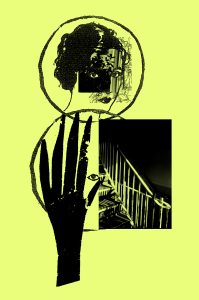
A time to be small.

long time no… nothing.
I have been quiet over the past few months, on social media, and on here, my blog. It’s not that I don’t have anything to say, I just don’t feel the same level of need I used to about expressing myself consistently and frequently online. I have spent a lot of time thinking about the effects of social media on my practice, my own cognition and mental health, and a ‘less is more’ approach ultimately suits me better. I enjoy the connectivity, the instantaneousness, the access to a global array of stimuli. But I also need a lot of quiet time to not feel overwhelmed and disconnected from myself and my own goals. I’m not going to riff about it for too long, as there are people who discuss this topic far more eloquently than I, but I definitely feel a lot better when I am not ‘wired in’. I am also usually more productive and present in my own practice. Social media can be a valuable tool to escape from boredom, inertia, or discomfort, but I also need to sit with what is difficult, and form my own thoughts and escape plans. I also felt alienated by the disingenuous performative aspects of online personas. Yes- I get that the whole thing is in essence performative, but that doesn’t mean I have to want to play. I probably spend or have spent, too much time thinking about my online presence, to the point that I have disappeared up my own… anyway, as an over-thinker, I need to focus my energy on ‘doing’ IRL, rather than fretting about ‘presenting’ online.

As I have previously discussed, I also find social media an unpleasant space to function as an artist. If you post something that is different to your previous works or posts, you might feel a pang of dismay at a lack of engagement. Why don’t people like this one?? I thought I was getting somewhere! Low likes gang I see you! Everything about socials requires consistency- in content, posting level, presence and use of the app. These things are not conducive to everyone’s process, or indeed being a human. I admire people who have harnessed platforms to further their careers, but it doesn’t work for everyone. And that’s okay.

So enough about what’s not working. What has been working is burrowing deep into the research phase of my VACMA (Visual Arts & Crafts Makers Award) project- Abyssal Glow (working title).

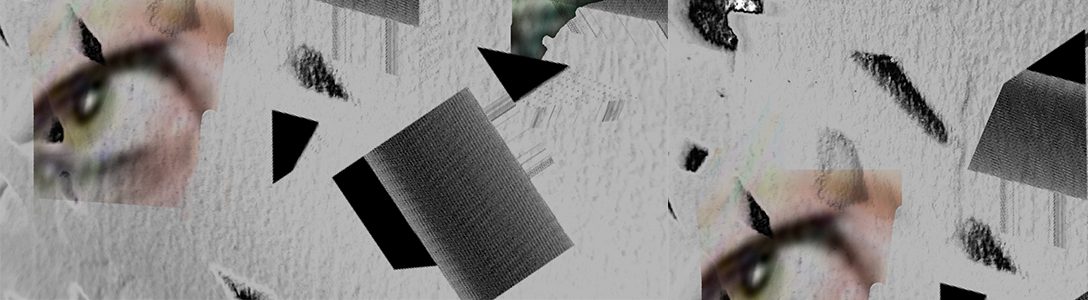
It has felt like this is the first time for a long time that I have a solo project that I am excited to progress, to return to, and I allow it preoccupy my mind daily. I keep referring to it as a ‘full circle’ project as I am returning to those long left behind skills- darkroom photography and animation. My inspiration for this project has been a combination of dedicated research, alongside a lot of gut feeling, and the infiltration of different surroundings in my subconscious.
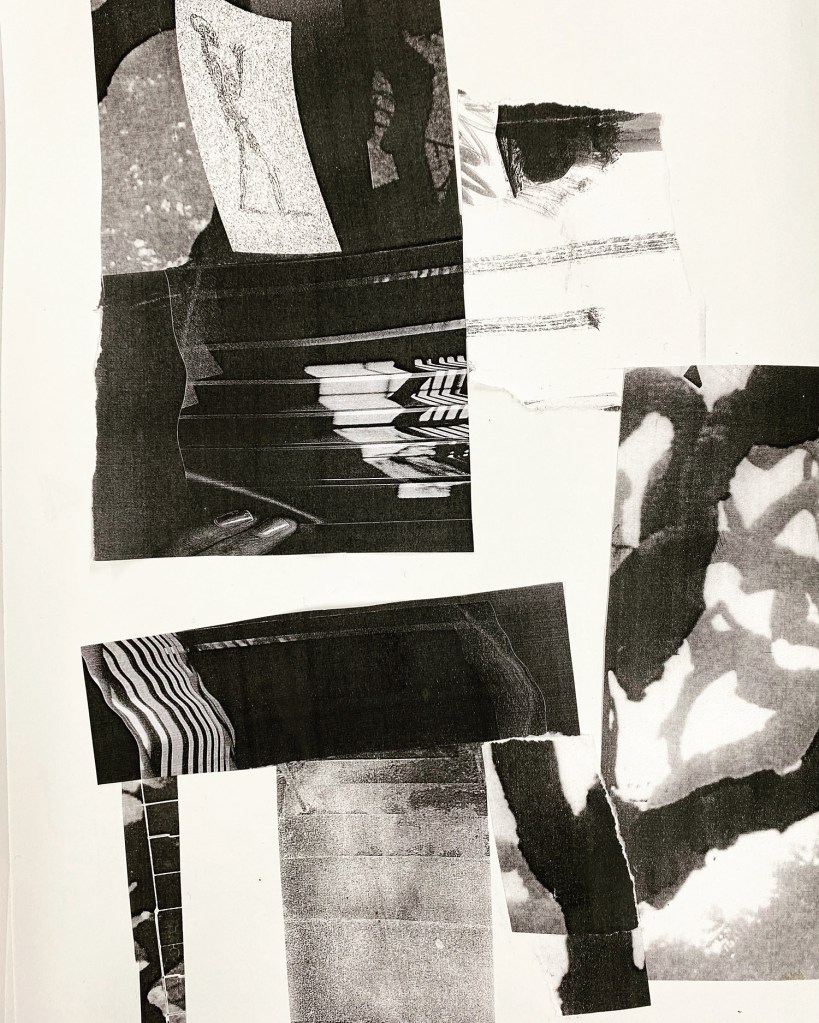
Collage piece as I work through recurrent image ideas.

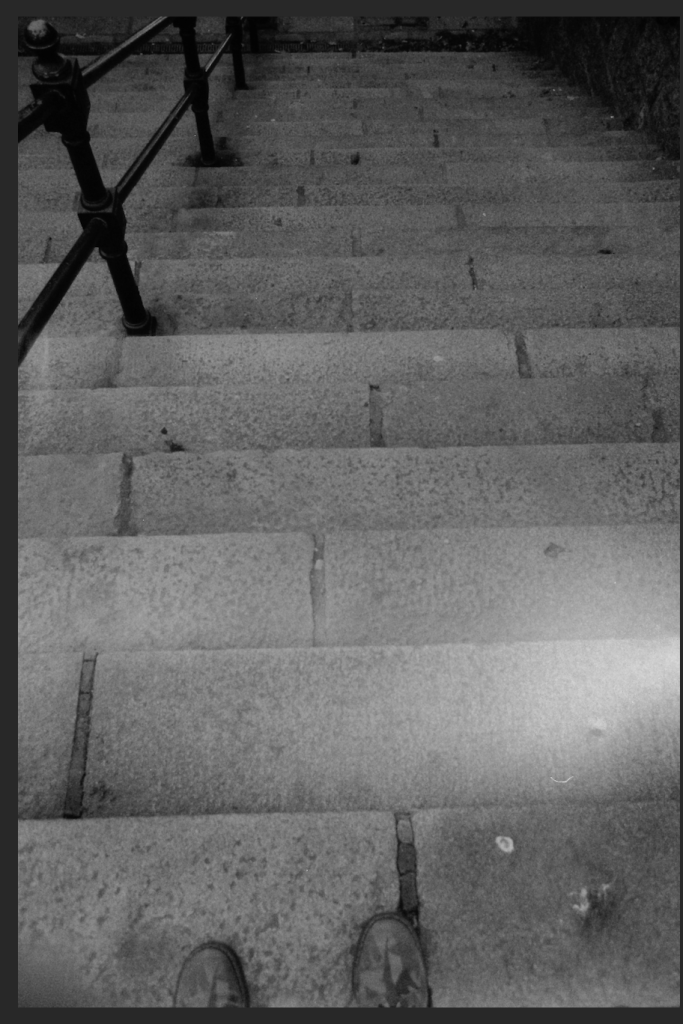
I have found myself returning over and over to particular images I took in the past, but instead of thinking ‘I need to make something new and stop dwelling’, I have actively incorporated these images into the project, with two of them becoming absolutely central. If they seem important, and keep reappearing, then why am I fighting it so doggedly?

In terms of art historical references, I feel that I have naturally accumulated a series of influences that, although contrasting, sit well together within the overarching project. Basically it feels like I have been supplying my subconscious with what seemed like disparate elements, but they have coagulated together in the background to make some kind of monstrous, cohesive whole. Delightful.
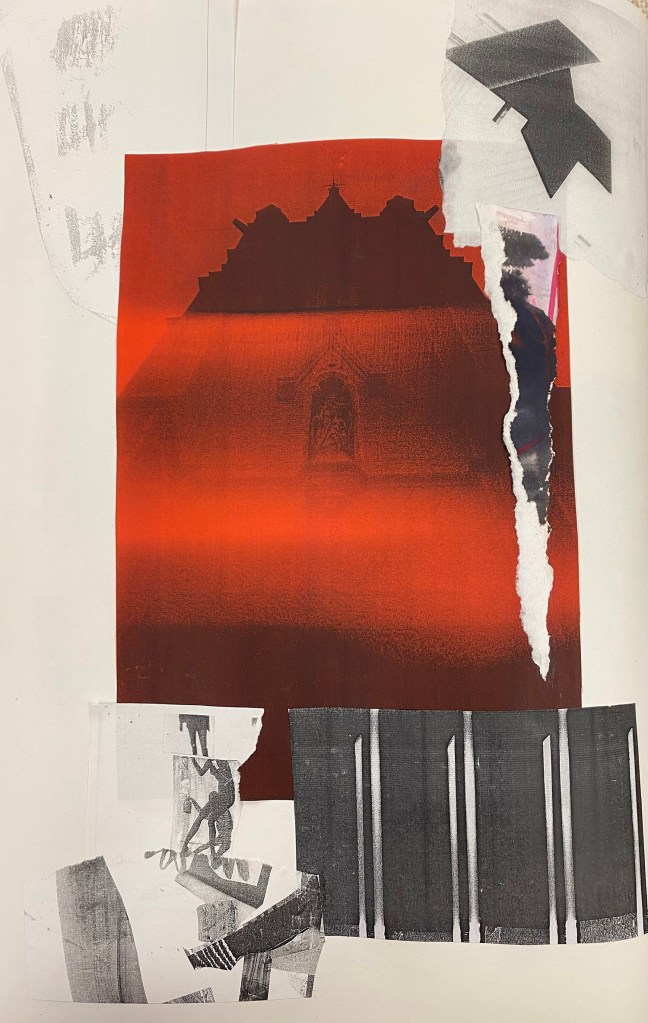
Another collage ‘sketch’ for the project.

This project has contrasted with many I have undertaken previously as I actually feel comfortable in it. I don’t feel like I am scrabbling around to bring something together, or forcing an idea that doesn’t have a lot of mileage to be something bigger than it should be. I am in a good space in this project, it is a place of refuge and stability. It is a place of depth, and I feel more than ever the influence of my subconscious on my practice. This sounds a bit airy but for this particular idea, I have been mulling over themes and influences for so long they have become part of an internal vocabulary. I don’t really like describing something as ‘feeling natural’ because what does that even mean, but it feels unforced, and even… easy? Maybe it’s the development of my own visual language.
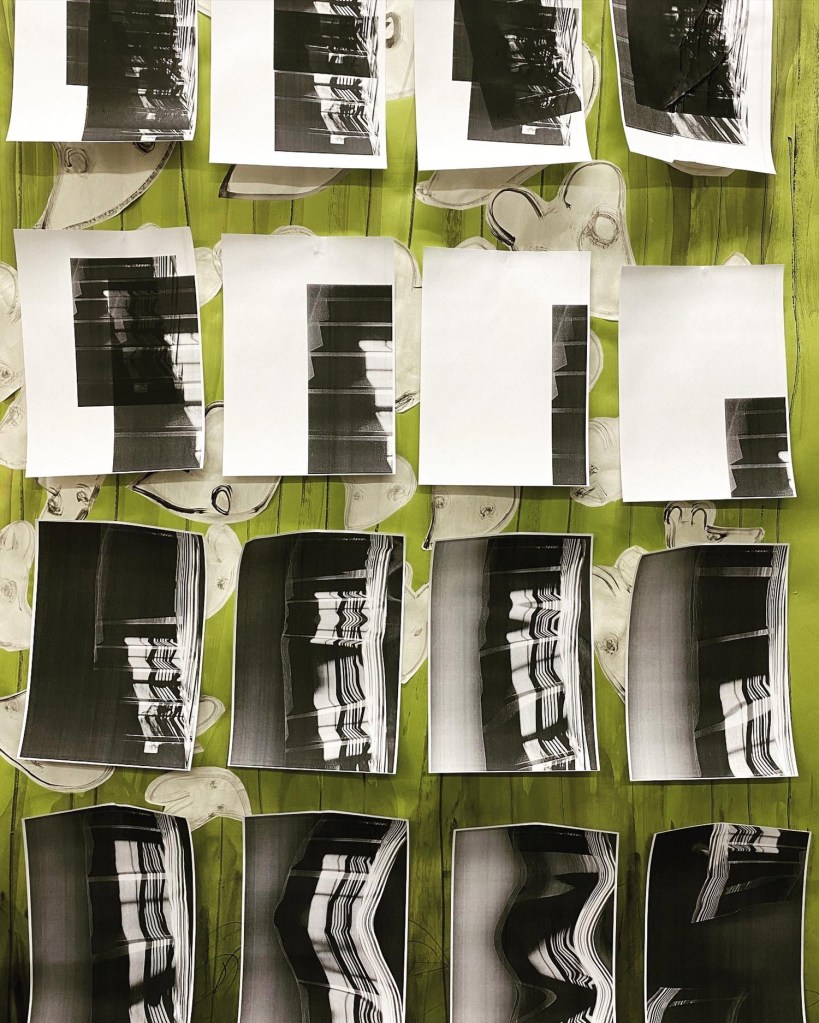
Studio wall of ideas.

I don’t mean easy in the sense that I am not challenging myself, but that I am working around, and through, any obstacles. I think what I am experiencing is the realisation that I actually have a lot of experience now. I am mid-career guys. So perhaps the sense of confidence just comes from a solidifying of my identity as an artist. I feel much more at home there, and I can tell people what I do without the same level of uncertainty or imposter syndrome strangling me into shamed silence. I feel I have a lot of tools that support me, like a good foundation: a studio, supportive peers, access to materials and equipment… some of the basic elements I didn’t have for a long time. Being out there in the artistic wilderness is one of those oh it’s character forming things, but it doesn’t necessarily engender a desire to continue on. Being an artist can feel like an isolating, solitary experience, and sometimes you need it to be, to find your own direction I suppose. But it can also make it feel like an unrelenting slog with little reward, and a precariousness that many would find intolerable- both in an intellectual and material sense. I suppose it is.

I think another contributing factor to this sense of solidness in my identity is being employed as an artist. Being paid to work as a skilled professional in a variety of settings, as an artist. I spent many years as an arts organiser, supporting the careers of artists, designers and makers, which gave me a greater understanding of how the cultural sector works, and a sense of satisfaction in promoting visual art etc, but sometimes you need to decide if you want to be a cheerleader, or if you want to be on the other side. To be honest, part of this decision to move away from arts organiser type roles was also that every post I applied for in the past year I didn’t get an interview for- not that I felt entitled to yeahhh- but it just spelled out to me that I wasn’t going to get anywhere pursuing that avenue as a means of supporting myself.

Image Credit: https://www.instagram.com/freeze_magazine/

I am often moved to have strong views on ‘art jobs’ because as an artist it can seem like a good idea as they are adjacent to your practice, but they can also take up a lot of the brain space that your own creative endeavours require. Throughout the years I have, alongside my freelance work and practice, had non-related jobs, such as roles in administration, and more recently in physical work such as cleaning (more slog). These jobs do not attack the part of my brain I need to be creative in the same way, and yes they present their own challenges, but they do not take away my desire, or ability, to maintain my practice- a new development! Some of these roles also offer the same level of pay as creative sector roles, so it doesn’t seem like some grave mistake. Unless I actually want anyone to read my CV I guess…

I am grateful for the roles that I had as an arts organiser, but I know it was the right decision for me to instead choose to pursue roles as an artist- teaching, commissioned works, workshops etc, and supplement that with ‘non-art’ work. This is the method I am using at the moment, and I very well may end up eating my words, but I am sure there are many creatives out there who can relate to this push-pull of finding work as an artist. It’s not even like there are a lot of ‘art jobs’ out there either. Who’s to say anyone would want me anyway? I certainly didn’t have much success in my last round of approaches. I also think that maybe it’s my age (oh no guys, mid-career), or that my CV is a weird mish-mash that lacks cohesion and is in no way at all linear (true). Welcome to life as an artist I guess. I don’t hold these views in a bitter way, as I think it’s clear to me what’s ‘for me’ and what’s not, in many senses. I also have to be at peace with my own life choices- to choose to pursue a life as an artist, with its innate instability, inconsistency and challenges, when I could have done… something else. I have always said that I would keep going until I couldn’t any more, I would keep trying to live this way and make it work, and maybe one day I’ll have to give it all up and retrain in cyber (we still haven’t forgiven Rishi for that one). But I keep on.

Always a WIP.

Thank you for reading.

More on my project soon (me or otherwise).

J ðŸ˜Š

What now, zines & more

hello again.

I had prepared a January themed blog post at the beginning of the year, but I didn’t like the genericness of that, so I scrapped it and didn’t write another. For months! Give us nothing! I did! And now it’s March!

I don’t see this as a bad start to the year (naturally) but instead just curating my blog (see: protecting it from crap) and not feeling compelled to post dross to fill up space and tick a box. Do you believe me?

A brief digression into talking about goals:

Instead of doing a lot of thinking (not problematic in itself, but more in terms of sheer quantity of head scratching time), this year, I decided I need to do more doing. Of course I have spent a bit of time thinking about how I want to reshape the direction of my practice this year- but I want to initiate practical steps in a timely fashion wherever possible.

I feel like I want to strip back some of the layers I have accumulated around my art making. After several years of exploring so many new processes, new techniques, new focuses, I want to return to some of the things that were foundational in my art practice in its early years.

I have really enjoyed expanding my creative repertoire to include things like screenprinting, needle punch, embroidery, monoprinting, self-publishing etc etc, but I have long harboured the desire to do a ‘back to basics’ project that would require me to tangle with some technical and personal challenges.

Where did it all begin??

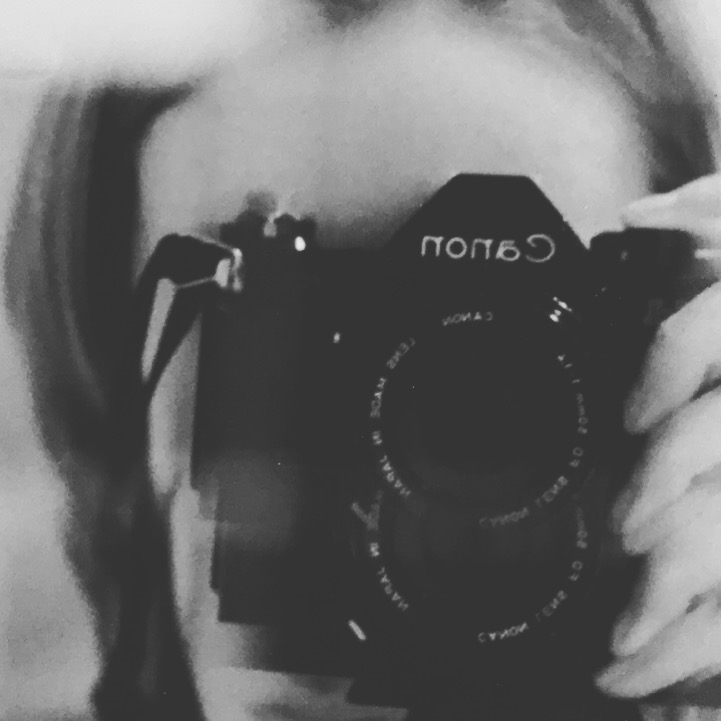
Specifically I am talking about darkroom photography (also animation, but we will get to that). I was lucky enough to have access to a darkroom in my school years during my first forays into black and white photography. My dad allowed me to use his 35mm camera- a Canon AE1 which I still have and use to this day, and I was able to process films, and make my first black and white print (which I still have somewhere- a flower). I enjoyed the hands on nature of the process, the variables, the tinkering, and the quiet, meditative quality of working in the dark.

me and my Canon AE1

As I have previously mentioned, I moved into a new studio facility last year and was delighted to find a darkroom therein. I have yet to reacquaint myself with the processes, but have formulated a mini-project in my head to try and kick start my thinking, and get me fired up about all things darkroom. I will update as this progresses. Currently I have a steady thematic direction and am gathering research. Initiating this phase felt like quite a relief. Phew, I have an idea, I have a purpose.

I have also applied for some small-scale project funding to get the proposal going and allow me to purchase materials etc, but I will try to push this forward even on a micro scale if this doesn’t come to fruition. Where there is a will, there’s a hideous project on a shoe-string budget- that’s what I always say!

What I’m working on currently:

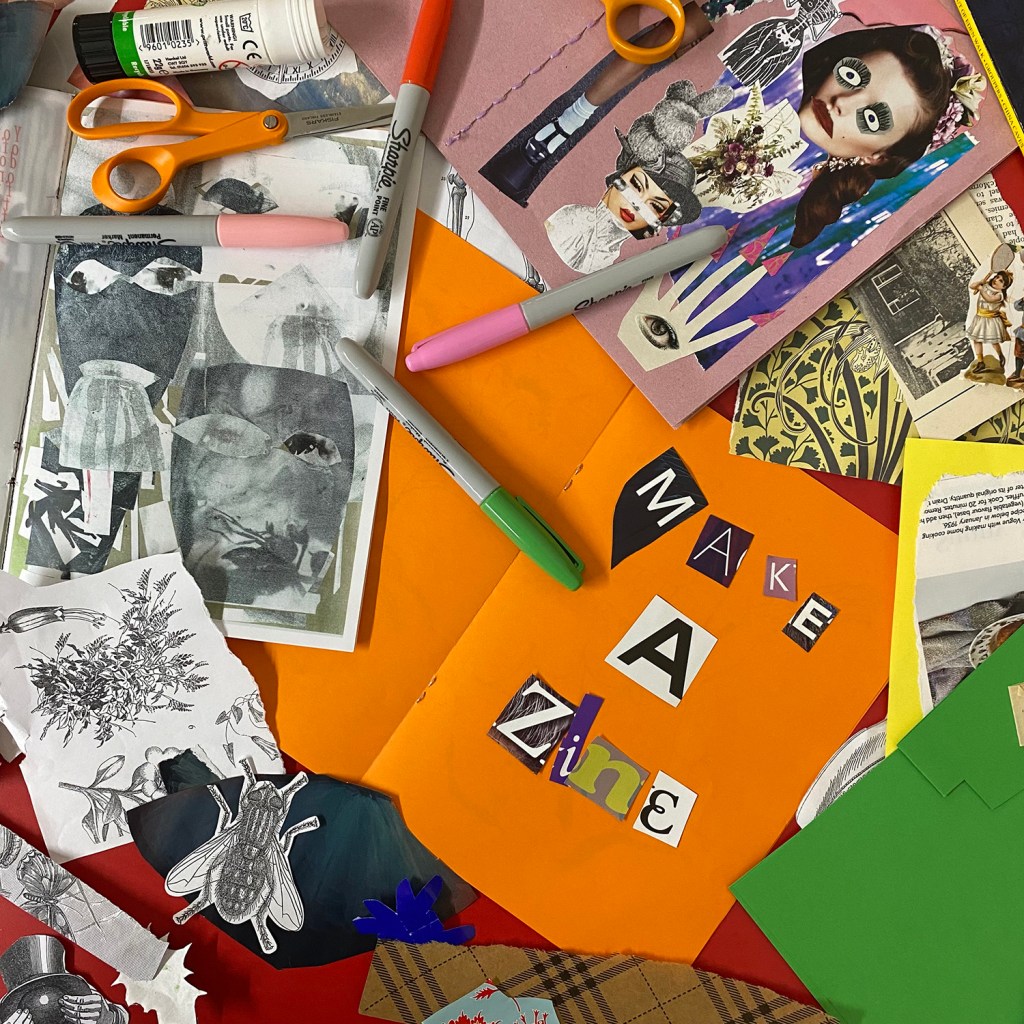
Since the beginning of the year I have been lucky enough to lead some more creative workshops. Professional practitioner time! These have been themed around making zines so far. I have, for many years now, enjoyed the process of making zines, mostly for showcasing my artwork and writing, and making them as part of my Cannibal Cubs projects.

I also enjoy collecting and reading other zines. I love a niche, and zines are a niche’s niche.

Self-publishing is fun and only as complicated as you make it (sometimes really complicated- love that). For years I was lucky enough to have access to a photocopier which hugely aided the development and dissemination of my creations. Also a long-reach stapler- very, very key. (Although I do stitch bind now too!). I borrowed this from my Dad initially (thanks again Dad) and he said to me ‘oh yeah I used it to make shitey booklets’, and honestly, same ever since. And no, I didn’t return it. The more garbage your aesthetic the better sometimes with zines, so it suited me as a DIY method of getting my work out there. How ‘out there’ it got is still up for debate…

I have also had a couple of zines professionally printed- primarily as part of a funded project, but also as part of a collaborative exhibition. I like the lo-fi aesthetic of a handmade zine, its potential and power, rooted in a long history of subversiveness, rebelliousness and subculture infighting. My favourites!

The workshops I have been leading have been aimed at beginners and accomplished zinesters alike, so I’ve tried to pitch them at an accessible level, but also allow people the opportunity to experiment and play, and maybe challenge themselves to step away from their usual method of making, or format etc. So far I have been pleased with the way these sessions have unfolded (excuse the poster zine pun), and look forward to continuing. I like it when a workshop opens you up to continuing a practice at home, and is affordable and accessible- both collage making and zines embody this well.

One of the other reasons I’ve enjoyed introducing people to zine making is that, like any hands on activity, it encourages people to slow down their thinking a bit, consider what they are constructing/writing, and have a break from the immediacy of online life, or even just daily routine and frenetic, wired in living. Looking at someone else’s handmade zine is equally an opportunity to take some time to see the world through another’s eyes, be exposed to opinions you may not usually encounter, see something stimulating… I can get quite evangelical about the possibilities and benefits.

Making something with your hands can be highly therapeutic, allowing you to get close to that coveted flow state. Being playful is something that can be severely lacking, or forgotten about completely, even for creatives or artists. Remember fun?

I always joke with peers about how ART IS NOT FUN!!! But it’s not really true. It’s trying to make a living from art that’s not fun. Play and creative practice are great ways to refresh your perspective, for creative professionals and well, anyone. Sometimes this needs to be enforced in a workshop environment (weee organised fun… said… not me), as carving out ‘playtime’ in your own schedule always seems to fall off the list, if it ever even makes it on in the first place.

What I’m reading

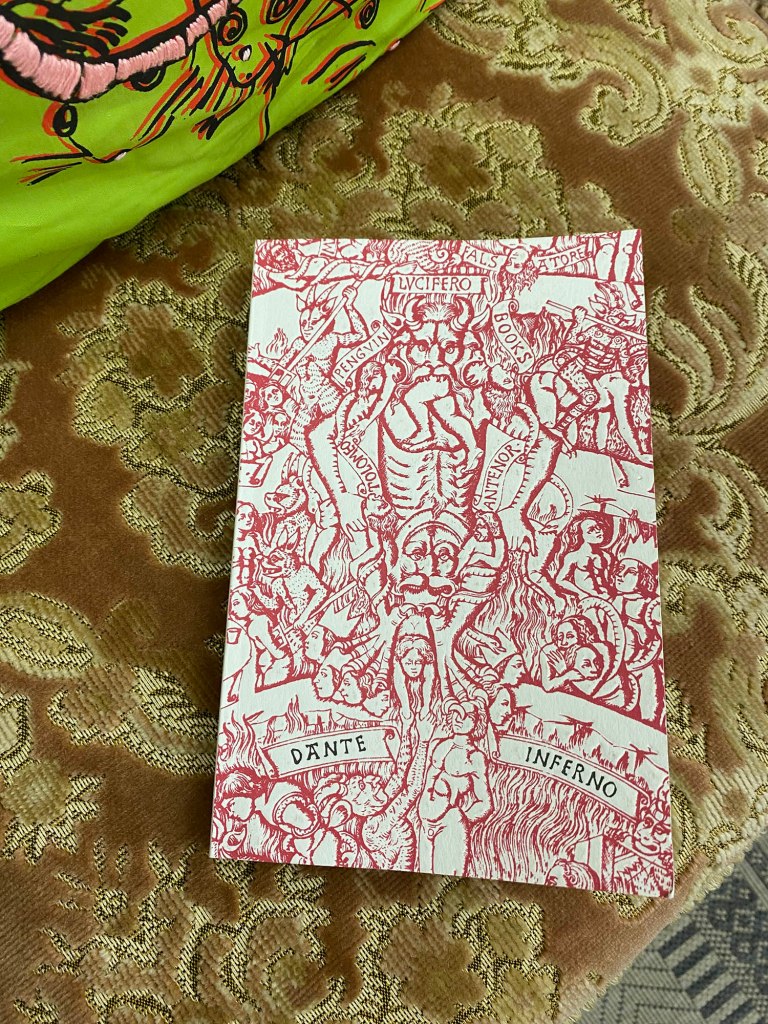
INFERNO!! by Dante

Pretty sure I’ve stood in the ‘vestibule of hell’ before in many public buildings but I digress.

Picked this up as a bit of research for a project. I danced around reading this after toiling with Ovid and others. Sometimes another saga… I’m not ready. I think I’m a more mature reader now but was surprised by how readily I was absorbed into the journey.

To be continued…

What I’m listening to

I just finished Katherine Rundell’s wonderful book on John Donne ‘Superinfinite‘. I enjoyed this biography, which was very humorous, very well written and engaging. I came away with a new understanding of Donne’s life and his works. I have studied his poetry, read it countless times, and I still gained fresh insight and enthusiasm to revisit his work once more. 400 years on (and no, that’s not since I studied him THANKS), it amazes and delights me that works that are so old can still speak to us- the common themes are eternal to our species: love, death, suffering, grief, spirituality, all the big ones that move, motivate and unravel us.

I didn’t realise quite how many words in the English language that Donne was personally responsible for (no spoilers). It wasn’t always a totally edifying portrayal, but it added a human, ‘mortal’ element that I found lacking in other studies of Donne. It shows Donne as poet, lover, father, preacher- all phases of his life, and the paradoxical nature of these many transformations. He was someone at the mercy of his desires, beaten down by corporeality, but also someone totally enthralled and astounded by human life.

Highly recommend this book. I am a superfan. Life affirming, fascinating stuff.

That’s a short recap for now, thanks for reading!

J 🙂

Edinburgh highlights/ ‘difficult’ collections

I took a trip to Edinburgh a couple of weekends ago, had an interesting time catching some cultural and culinary highlights. Here is a quick round-up of some of my favourites.

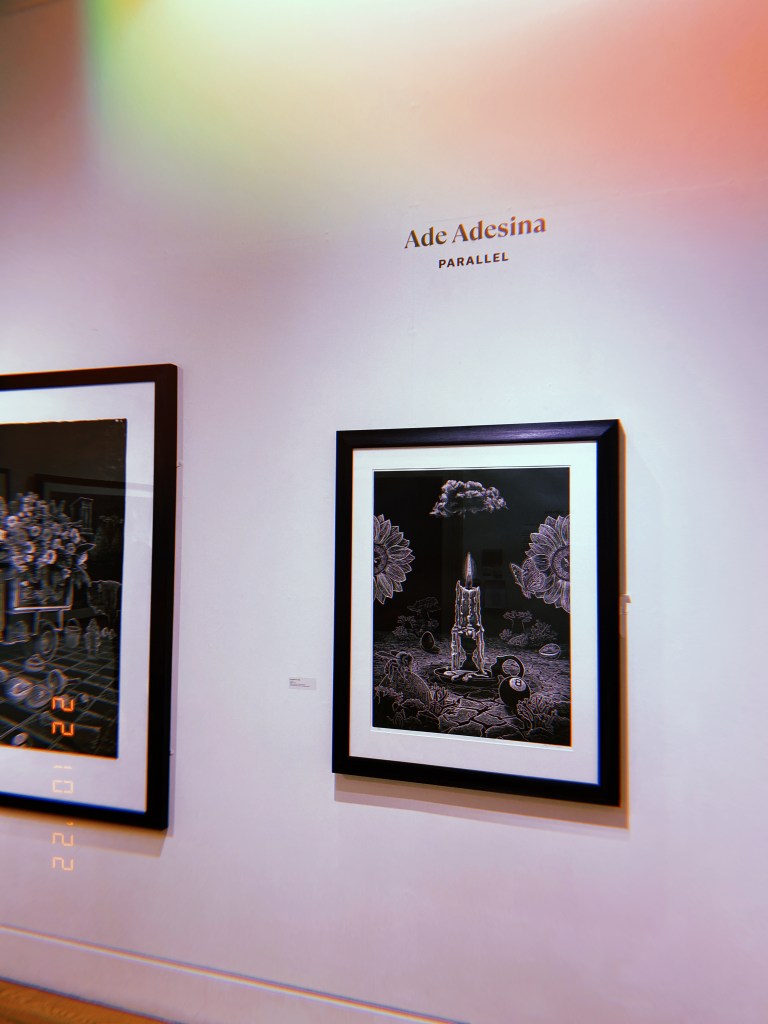
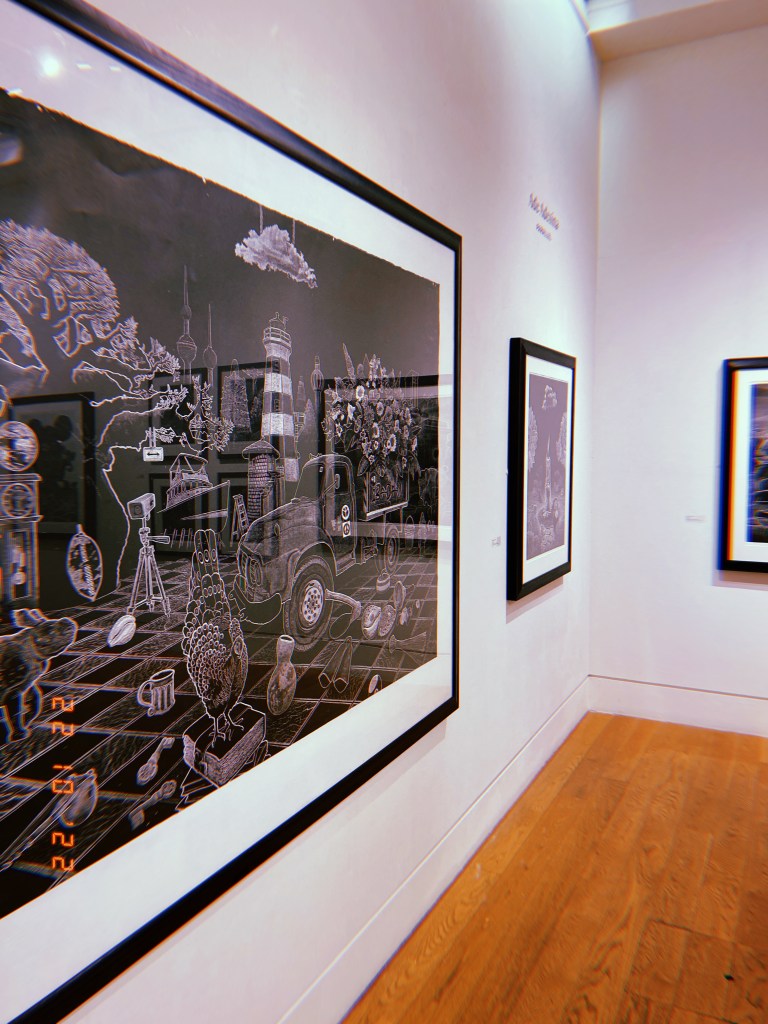
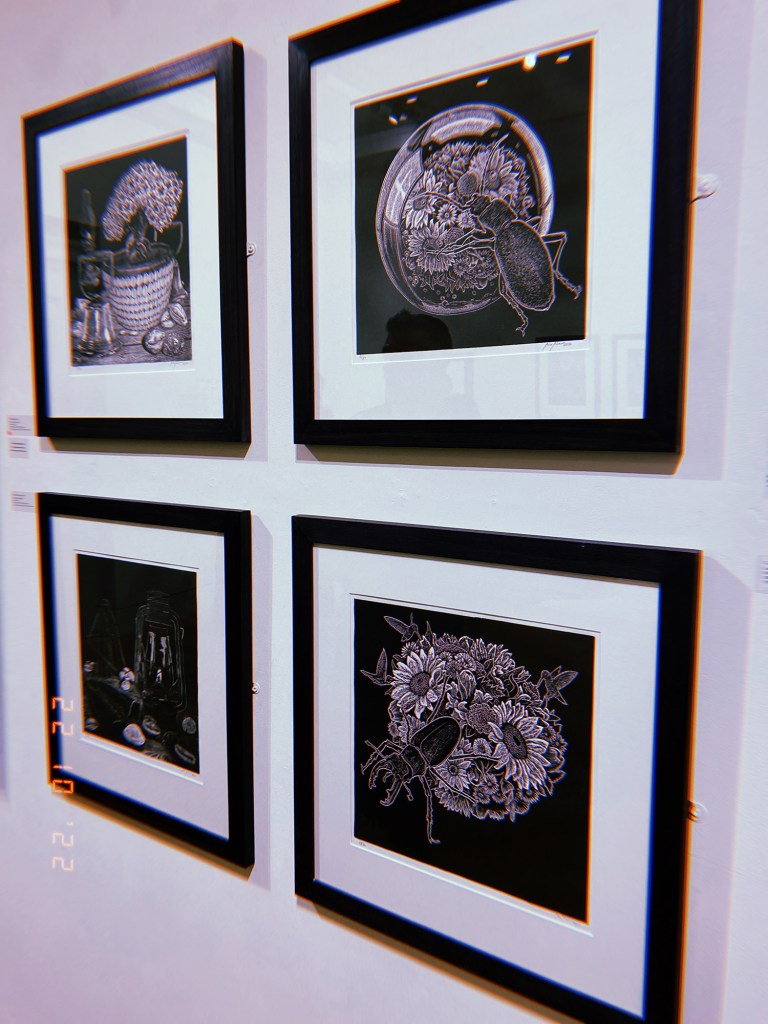
One of my first stops was the Royal Scottish Academy to catch Ade Adesina’s show ‘Parallel’.

I love Ade’s work- I could spend forever looking at all the details. I find insects endlessly appealing, and there are so many in these pieces. Check out more of his work here. His process videos always astound me.

I also visited ‘Anatomy: A Matter of Death and Life‘ at the National Museum of Scotland. No pictures of this as no photography was permitted- which makes sense when the exhibition contains human remains and some pretty graphic anatomical models. Collections of bone saws don’t appeal to everyone either (although every time I am in London I visit the Wellcome Collection which has a lot of medical instruments, and one of my favourite museum objects- Napoleon’s toothbrush! I love a random domestic object that has significance, not that I have a particular love of Napoleon or anything).

A few years ago I was studying for a PhD focusing on the curation of ‘difficult’ museum specimens (abandoned due to personal reasons), so I always have a special interest in exhibits which handle sensitive items. Naturally there are a lot of ethical considerations to such an undertaking, which museums have a duty to engage with more than ever (not to mention the provenance of their vast collections). This exhibit contained some items with ‘sensitive content’ warnings, and I found myself deeply moved, and at times disturbed, by what I saw.

The ‘exhibit’ (it feels strange calling it that) which will stay with me the most, was probably the skeleton of William Burke, of the infamous Burke & Hare murders in 1820’s Edinburgh. As part of the punishment for his crimes it was the judge’s wish that, after public hanging and dissection, his skeleton should be put on public display. Despite this being part of official judicial decree, I still find it hard to look at a human skeleton, particularly one imbued with this particular backstory. It’s a gruesome kind of fascination that draws you to a cabinet with such content.

I have previously visited the Surgeon’s Hall museum several times which also contains a lot of Burke and Hare artefacts- this museum is also well worth a visit (avoid the dentistry museum if you have the fear, it gives me the heebies). One of the items in this collection which stayed with me LONG after seeing it, and not included in the National Museum show, was a book supposedly bound in Burke’s skin. As far as contentious objects go, books bound in human skin are pretty high up the list (or at least my list). Ghoulish. I am unsure if this object is still on display today, or is just part of the larger collection.

The exhibition at NMS made me reflect on the public fascination with crimes like the Burke and Hare murders, in fact there was a good quote as part of the exhibit that commented on this public obsession at the time of the murders, and I wish I could have taken a note of it. It was very apt in encapsulating the alarming way gory details can be hungrily raked over by the media and lapped up by readers with equal fervour. The current popularity of true crime documentaries and dramas reflects a very old fascination indeed. I sometimes wonder if we disconnect from the ‘human’ side of these crimes- the impact on victim’s families, ignoring the risks of broader cultural ramifications of a fascination with violence and murder. This is pertinent given the controversy around the recent Dahmer series. Is this just a cultural handwringing reminiscent of the panic of the 90’s around the effect of violence in video games and Tarantino films?

I’m not sure how eloquently I can form the dark swirl of my thoughts around this, but standing in front of Burke’s skeleton I was brought very much into the moment, the experience of existing in a body, with a keen awareness of the very real harms that can be inflicted on the bodies of others. Looking at his hands, I felt a deep chill.

Being able to abstract the impact of crimes through a screen, or behind glass- does this diminish our ability to empathise with the bodies of others? At what point does it become acceptable for trauma to become entertainment, or vice versa? I feel like there’s probably a wealth of good writing on this- suggestions welcome.

Incidentals

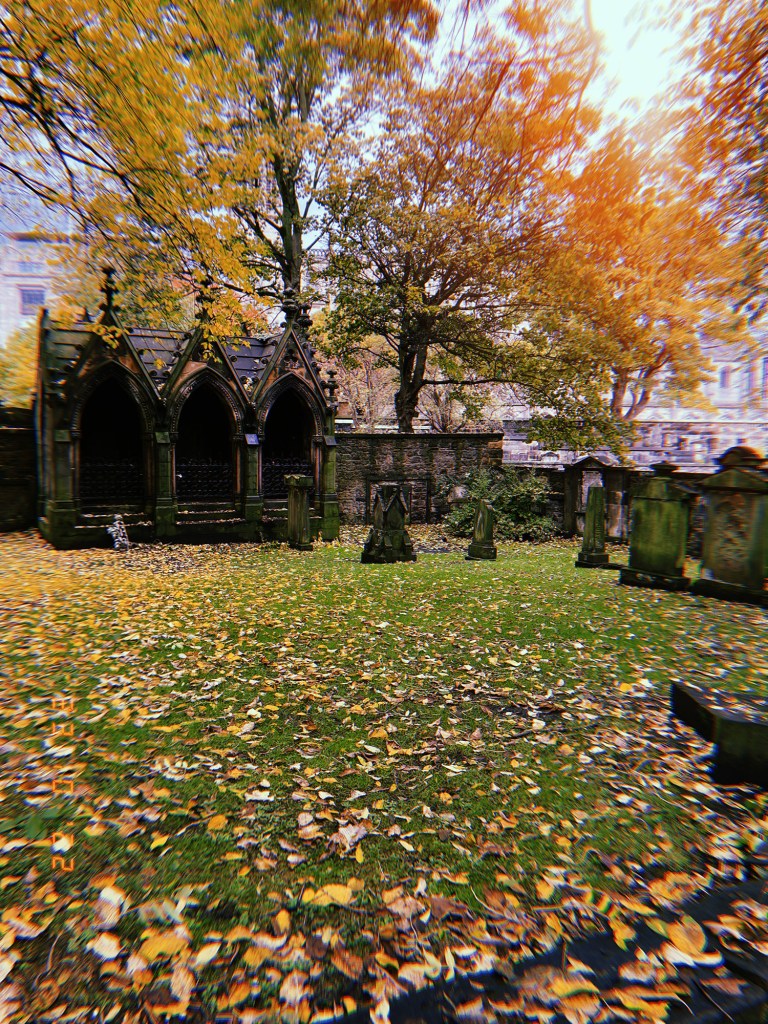
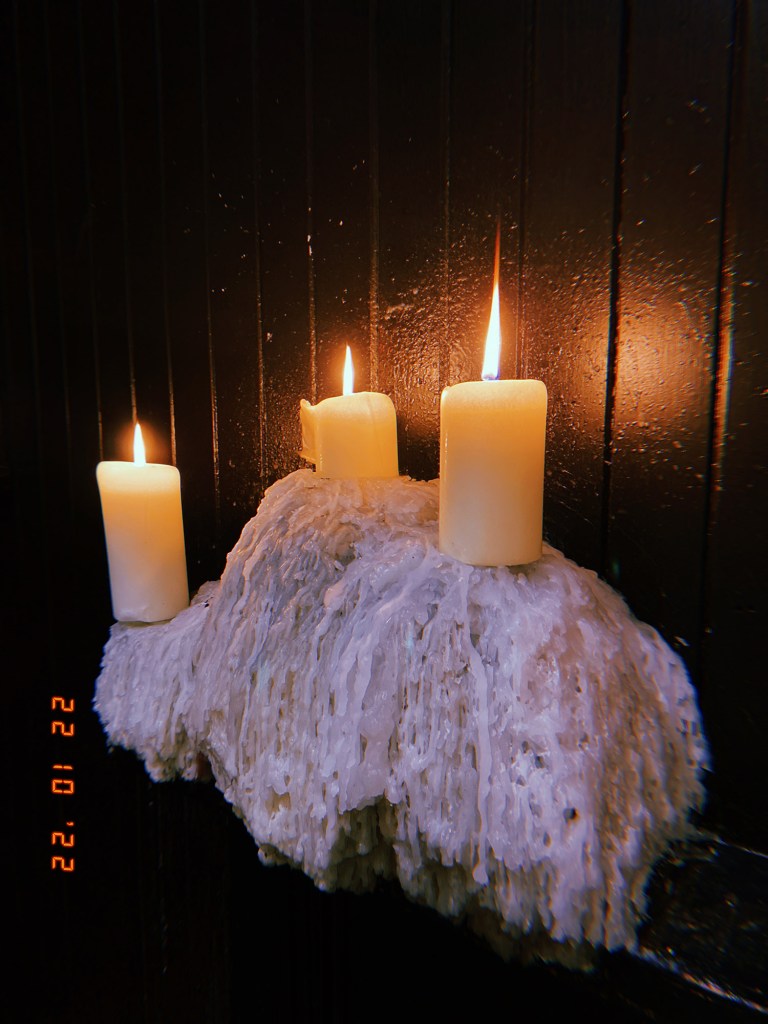
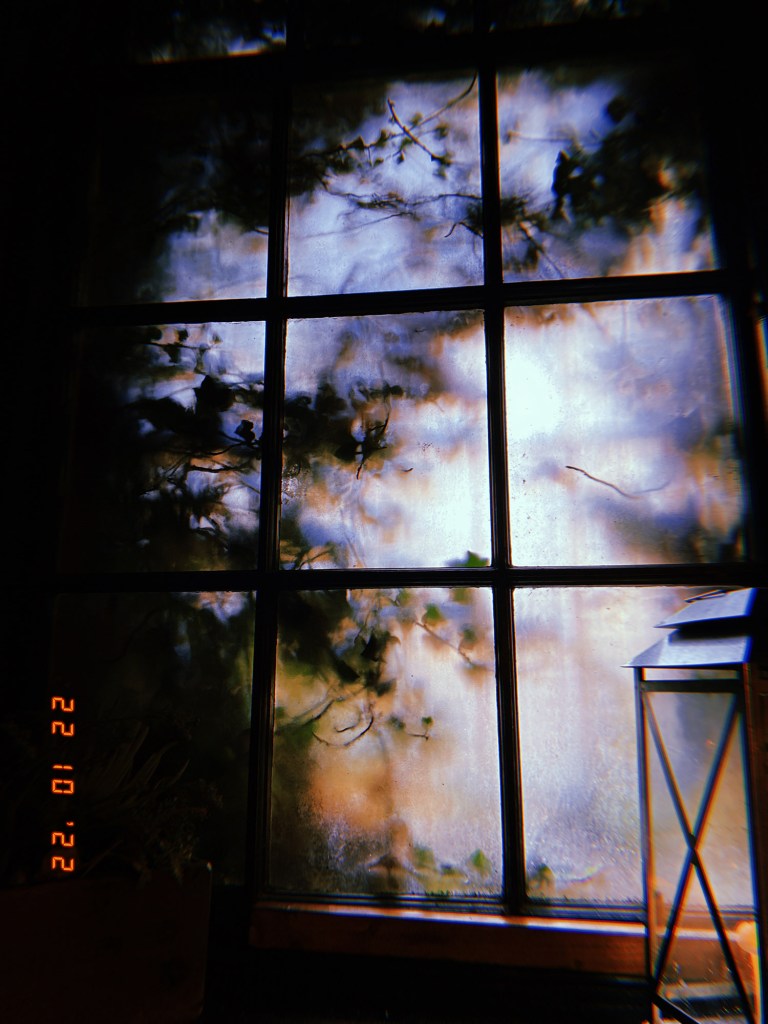
To lighten the mood- here’s a few incidental shots of Edinburgh that caught my eye as I wandered around. I used to live in the city and always find new views, new places, and fresh perspectives on each visit. It’s a very international and culturally rich place, I always come away feeling like I’ve taken in some visual sustenance.

PS I said to lighten the mood- perhaps these seem like gloomy images, but it was late October in Edinburgh so you work with what ya got!

Thanks for reading as always. I’ll be back soon with another travel update, a new exhibition and some studio progress.

J 🙂